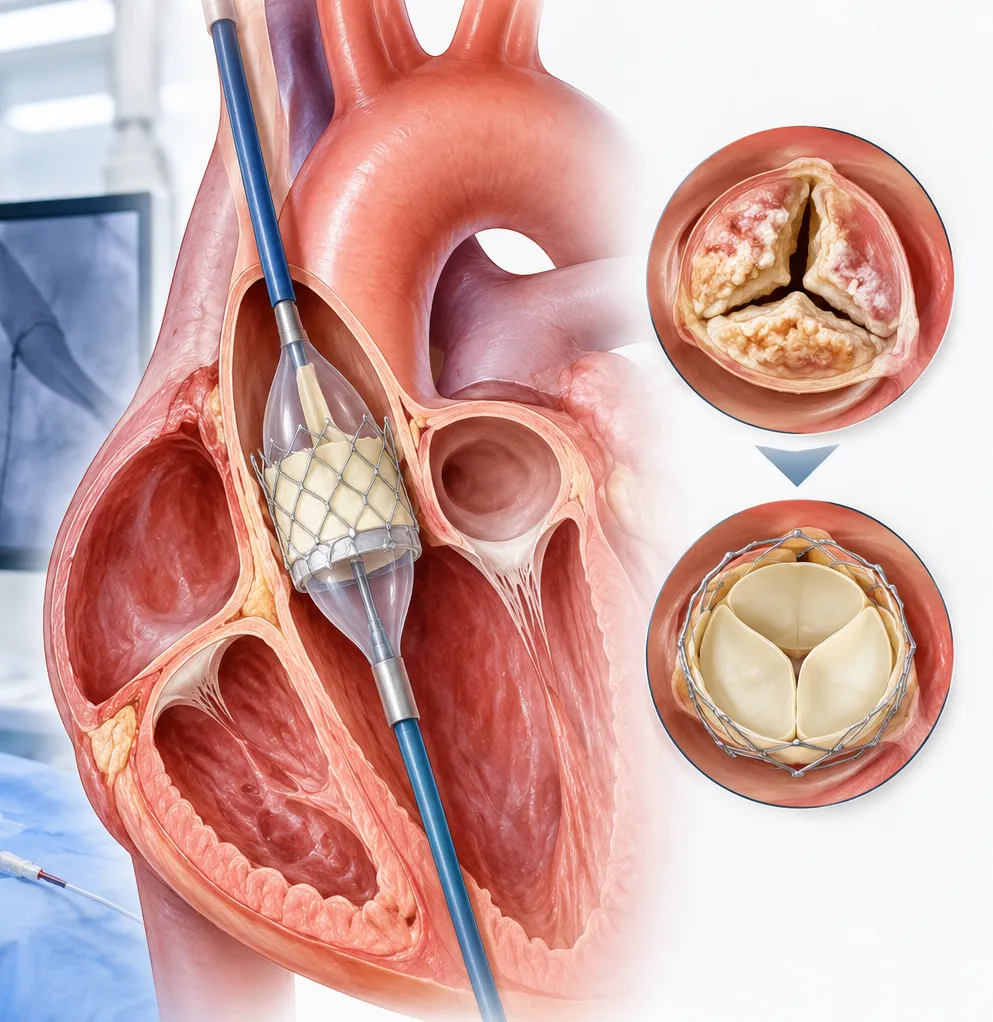
Severe aortic stenosis occurs when the aortic valve becomes significantly narrowed, making it harder for the heart to pump blood effectively. TAVR, or Transcatheter Aortic Valve Replacement, is a catheter-based procedure used to replace a diseased aortic valve in appropriately selected patients.
Symptoms of significant aortic stenosis may include breathlessness, chest discomfort, reduced exercise capacity, dizziness or fainting. Some people initially adjust their activities and may not immediately recognize how much their functional capacity has changed.
TAVR differs from traditional open-heart valve replacement because the replacement valve is delivered using a catheter-based approach rather than conventional open surgery.
Suitability depends on several factors, including:
- Severity of aortic valve narrowing
- Symptoms
- Age and overall health
- Heart anatomy
- Other medical conditions
- Surgical risk
- Imaging findings
- Expected benefits of valve replacement
For patients in Pune and Maharashtra considering treatment for severe aortic stenosis, evaluation generally involves detailed echocardiography and additional imaging or investigations required for procedural planning.
At The Heart Clinic, Dr. Satyajeet can assess valve-related symptoms and cardiac findings and guide patients regarding further structural heart evaluation when indicated.
TAVR is not automatically the preferred treatment for every patient with aortic stenosis. Some individuals may be better suited to surgical valve replacement, while others may require continued monitoring until intervention becomes appropriate.
A careful heart-team assessment helps determine which valve treatment strategy fits the patient's anatomy, clinical condition and overall treatment goals.
Keywords